 blog
blog
Amethyst Jewellefry: A 2026 Guide to Buying Real Gemstones
Table of Contents
- Why Amethyst Jewellery Belongs in Every Collection
- How to Tell If Amethyst Is Real: A Buyer's Checklist
- Amethyst Gemstone Price: What Drives the Number
- Amethyst Necklaces, Rings, and Bracelets: A Style Comparison
- Amethyst Birthstone Jewellery: Gifting Guide for February
- Caring for Amethyst: Cleaning, Durability, and Everyday Wear
- Ethical Sourcing and Sustainable Amethyst Jewellery
- Conclusion: Choosing Amethyst Jewellery That Lasts
- Frequently Asked Questions
Last Updated: October 6, 2026
Why Amethyst Jewellery Belongs in Every Collection
Amethyst jewellery pairs rarity with everyday wearability. This guide explains how to buy real gemstones, spot fakes, and understand what drives price.
Few stones offer this much color for the money: amethyst delivers beauty, durability, and meaning without a four-figure budget.
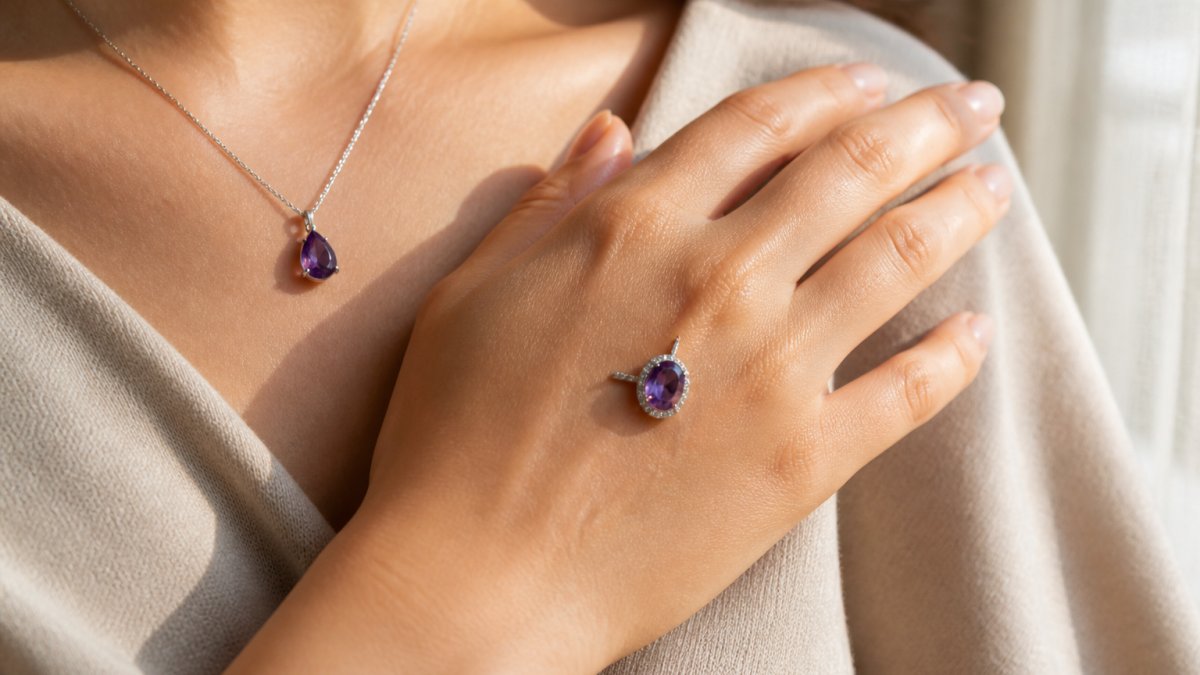
The February Birthstone and Its Meaning
Amethyst is the February birthstone, which makes it the default gift for anyone born in that month. The Gemological Institute of America's gemstone encyclopedia documents amethyst's mineral composition and its place among quartz varieties, and it remains the standard reference for anyone verifying a stone's identity.
That is why amethyst sells most in January and February; the rest of the year, buyers come for the color.
How to Tell If Amethyst Is Real: A Buyer's Checklist
Learning how to tell if amethyst is real starts with two facts: natural amethyst almost always shows uneven color zoning, and at 7 on the Mohs scale it is far softer than diamond. Real stones feel cool and show tiny internal flaws under magnification, not the clean interior of glass.
Work through this checklist before you buy:
- Look for color zoning: genuine amethyst is usually darker at the stone's tip and lighter near the base
- Check for inclusions under a loupe; flawless clarity at a low price is a red flag
- Ask whether the stone is natural, treated, or synthetic, and get it in writing
Natural, Treated, and Synthetic: What You're Actually Buying
Natural amethyst is mined quartz formed over millions of years. Treated amethyst is natural material heated or irradiated to deepen its purple, accepted by the trade if disclosed.
A quick way to sort them:
Type | How It's Made | Typical Value | Watch For |
|---|---|---|---|
Natural | Mined and cut | Highest | Color zoning, inclusions |
Heated or irradiated | Natural stone, treated | Moderate | Undisclosed treatment |
Synthetic | Grown in a lab | Lowest | Sold as "natural" |
Ametrine | Natural quartz, purple and yellow | Varies | Sold as pure amethyst |
Prasiolite | Heated amethyst, green | Moderate | Confused with green amethyst |
Prasiolite, or green amethyst, is amethyst heated until it turns green; ametrine is a natural blend of amethyst and citrine. Neither substitutes for purple amethyst, but both are legitimate quartz gemstones worth knowing.
Amethyst Gemstone Price: What Drives the Number
Amethyst gemstone price is driven by color first, then clarity, cut, and carat weight. Deep violet with strong saturation and no brown or gray tint commands the most; pale lilac sells for a fraction of that.
Where you buy matters as much as the stone. Mass-market fashion jewellery, mall chains, and online marketplaces price differently from artisan studios, and the gap reflects labor, setting quality, and how much of the sourcing story a seller can prove. At thejewellution, pricing depends on the craftsmanship.
The Four Cs and How They Affect Value
The Four Cs apply to amethyst as they do to diamond, with one adjustment: color carries more weight here than in almost any other gemstone.
- Color: Deep violet with even saturation is the top tier; pale lilac sits at the bottom
- Clarity: Eye-clean stones are the norm; visible inclusions lower value quickly
- Cut: A well-proportioned cut returns light and deepens apparent color
Amethyst Necklaces, Rings, and Bracelets: A Style Comparison
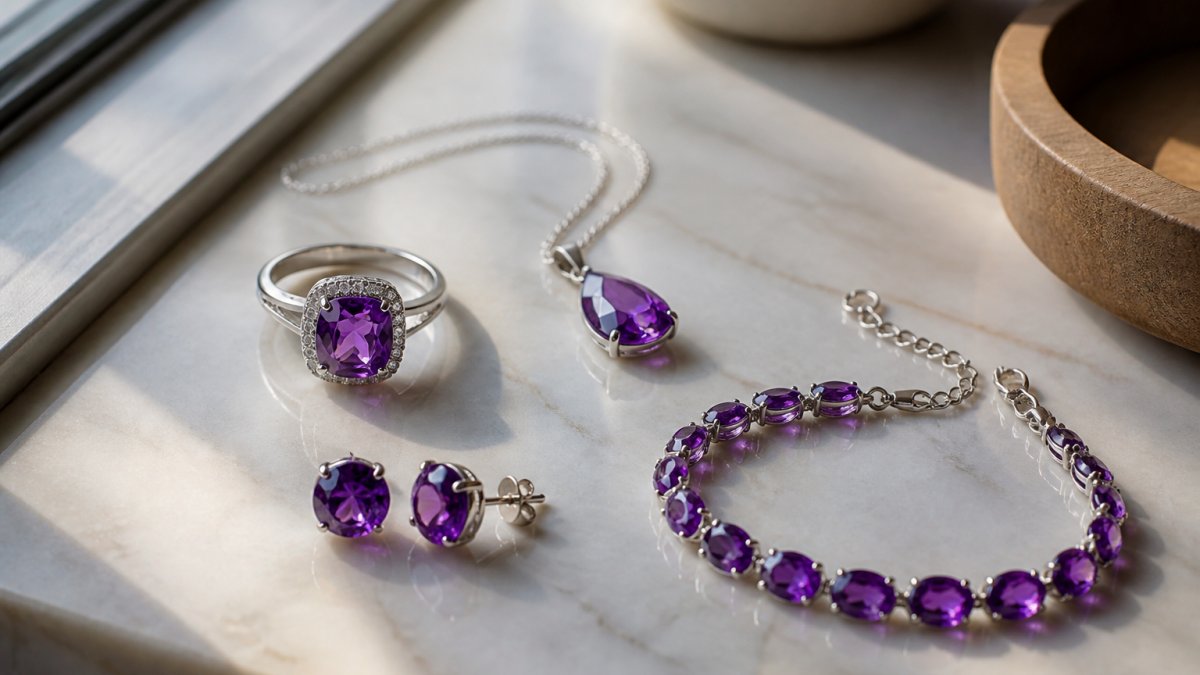
Most amethyst jewellery pages show a product grid and let you guess which piece fits your life. A better approach is to compare pieces by how they are worn, what setting protects the stone, and what you should expect to pay. Amethyst sits at 7 on the Mohs scale: durable enough for daily wear, softer than sapphire and diamond.
Piece | Best For | Setting to Look For | Wear Frequency | Typical Price Band |
|---|---|---|---|---|
Pendant necklace | Gifts, layering, evening | Bezel or prong, 14k gold or sterling silver | Regular | Entry to mid |
Statement ring | Personal style, occasions | Bezel or heavy prong with protective gallery | Occasional | Mid to high |
Stud earrings | Everyday, office | Secure post and friction or screw back | Daily | Entry |
Tennis bracelet | Formal wear, stacking | Box clasp with safety catch | Occasional | Mid to high |
Jewellery set | Gifting, weddings | Matched metals and cuts | Occasional | Mid to high |
Necklaces: The Safest First Purchase
A pendant necklace is the most forgiving amethyst purchase because the stone hangs free and rarely strikes hard surfaces. A bezel setting wraps the stone's edge in metal and suits wearing under a shirt or while traveling; a prong setting shows more stone but exposed edges chip more easily. For a first piece, a 14k gold or sterling silver bezel pendant in the 6-8 mm range balances presence and price.
Rings: Where Durability Actually Matters
Rings take the most abuse of any amethyst piece because your hands hit doorframes, keyboards, and countertops all day. A bezel or heavy prong setting with a protective gallery is the practical choice; thin prongs on a large amethyst are a common failure point, and stones above roughly 10 mm catch on clothing. For an everyday ring, choose a smaller stone or remove it for gym sessions, gardening, and cleaning.
Earrings: The Everyday Workhorse
Stud earrings are the most wearable amethyst piece because they sit close to the ear and avoid the swinging contact that chips pendants and bracelets. Look for a secure post and a friction or screw back; screw backs are worth the upgrade if you wear earrings daily or sleep in them. Drops and hoops show more stone and suit evening wear, but they swing and strike phones, car doors, and countertops.
Bracelets: The Highest-Risk Category
A tennis bracelet or bangle puts amethyst in constant contact with desks, keyboards, and car doors, so bracelets chip more often than any other amethyst piece. Choose a box clasp with a safety catch so the piece does not fall off unnoticed, and consider stones set low into the metal rather than raised. A bracelet suits occasional wear but is a poor choice for someone who never takes a piece off.
Gold vs. Silver: What the Metal Actually Does
The metal changes how the purple reads. Yellow gold warms the violet and can make a stone with a slight brown tint look richer; white gold and sterling silver cool the color, which can wash out pale lilac but flatters deep, saturated violet. Sterling silver is softer than gold and scratches sooner on a ring, while 14k gold holds up better for daily wear.
A Quick Decision Path
For one piece you will wear most days, start with stud earrings or a bezel pendant. For occasions, a statement ring or tennis bracelet gives you more stone for the money. Buying for someone else? A pendant in a neutral metal is the lowest-risk choice. The piece matters less than the setting: a well-protected amethyst in a simple design will outlast a fragile showpiece every time.
Amethyst Birthstone Jewellery: Gifting Guide for February
Amethyst is the February birthstone, the default gift for anyone born that month. The more useful question is which piece fits the recipient and the occasion, because a February birthday, a milestone anniversary, and a just-because gift call for different choices.
Match the Piece to the Recipient
Recipient | Best First Choice | Why It Works | What to Avoid |
|---|---|---|---|
Colleague or acquaintance | Stud earrings | Low-commitment, fits any wardrobe | Rings, which require sizing |
Close friend | Pendant necklace | Personal, easy to layer, carries meaning | Oversized statement pieces |
Partner | Ring or matched set | Signals permanence, pairs with milestones | Guessing the ring size |
Parent or grandparent | Pendant or brooch-style piece | Classic, easy to wear | Trend-driven designs |
Teen or young adult | Small studs or delicate pendant | Age-appropriate, affordable | Heavy or formal settings |
A colleague gets studs: lowest-risk, no ring size needed. A close friend gets a pendant with a note about the stone's history, turning a small gift into a personal one. A partner gets a ring or matched set, with the size confirmed first. If unsure, a necklace in a neutral metal flatters nearly everyone.
Occasion-Based Recommendations
- February birthday: A pendant or studs is safest. If the recipient already wears amethyst, a matched set adds range without duplicating what they own.
- Milestone anniversary: A ring or matched set carries more weight than a single piece, and amethyst's association with calmness and clarity of mind suits a long partnership.
- Wedding or bridal party: Amethyst works as a bridesmaid gift because the color suits most palettes and the price stays accessible. Studs or delicate pendants in matching metals keep the set cohesive.
What to Confirm Before You Buy
Three details prevent most gifting mistakes. Confirm the recipient's metal preference, because yellow gold and silver read very differently against the same stone. Confirm whether they wear earrings daily, which determines whether studs fit. If buying a ring, get the size right or choose a piece that needs no sizing, such as a pendant or studs.
A Note on Meaning
Amethyst has symbolized sobriety, peaceful sleep, and creative focus since Greek and Roman times, and many wearers still choose it for those associations rather than for any medical benefit. The Gemological Institute of America's gemstone encyclopedia documents amethyst's mineral composition and its place among quartz varieties, and it remains the standard reference if the recipient wants to verify what they received.
Caring for Amethyst: Cleaning, Durability, and Everyday Wear
Amethyst is durable enough for daily wear, but it fades in prolonged direct sunlight and scratches more easily than diamond or sapphire. Clean it with warm water, mild soap, and a soft brush, then dry with a lint-free cloth.
Keep amethyst in its own soft pouch rather than loose with harder stones, which will scratch it over time. Take rings off before gardening, gym sessions, or cleaning with harsh chemicals.
Ethical Sourcing and Sustainable Amethyst Jewellery
Ethical sourcing means you can trace a stone from mine to setting, and sustainable jewellery means the metal and packaging carry that same traceability. The Responsible Jewellery Council's certification standards set out what verified supply chains require, and the Kimberley Process documentation shows how the trade handles origin claims for gemstones more broadly.
Ask any seller three questions: where was the stone mined, who cut it, and what metal is in the setting. A studio that answers all three without hesitation is one you can trust. One that deflects is not.
Conclusion: Choosing Amethyst Jewellery That Lasts
The hard part is not finding amethyst; it is finding a piece whose color, setting, and sourcing you can verify. That is where thejewellution comes in. We build each design around refined craftsmanship, so our pieces are made to serve as a personal confidant rather than a passing trend, finished to hold their beauty for years.
Get started with thejewellution and choose jewellery you will still reach for a decade from now.
Frequently Asked Questions
How can I tell if amethyst jewelry is real or fake?
Real amethyst shows uneven color zoning and tiny natural inclusions when held to light. Fakes like glass or synthetic stones look too uniform and flawless. Check for air bubbles (a sign of glass), and note that amethyst scratches glass but glass cannot scratch amethyst. A reputable seller will disclose whether the stone is natural, treated, or synthetic.
What is the price of amethyst gemstones?
Amethyst gemstone price depends on color depth, clarity, cut, and carat weight. Deep violet stones with few inclusions command higher prices than pale or heavily included ones. Natural amethyst typically costs more than treated or synthetic versions. For current pricing on specific pieces, check thejewellution's website, as costs vary by design.
Is amethyst durable enough for everyday jewelry?
Amethyst ranks 7 on the Mohs hardness scale, so it resists scratches well but can chip with hard impact. It works for everyday rings, necklaces, and bracelets if the setting protects the stone. Avoid knocking it against hard surfaces, and remove amethyst jewelry before heavy exercise or cleaning. With reasonable care, amethyst holds up for years.
How do you clean and care for amethyst jewelry?
Clean amethyst with warm water, mild dish soap, and a soft brush. Avoid ultrasonic cleaners and steam, which can damage treated stones. Keep amethyst away from prolonged sunlight, as UV light may fade its color over time. Store pieces separately in a soft pouch to prevent scratches from harder gemstones like diamond or sapphire.