 ultimate-guide
Natural Diamond Engagement Ring: 2026 Buying Guide
Table of Contents
- Natural vs Lab-Grown: What Actually Changes for Buyers
- The 4Cs of a Diamond Engagement Ring, Explained Simply
- How to Read a Certificate for a Certified Natural Diamond Engagement Ring
- Natural Diamond Ring Settings: Solitaire, Halo and Beyond
- Diamond Shapes for Engagement Rings: Which Suit Which Hand
- Budget Planning and Value Trade-Offs
- Sourcing, Traceability and What to Ignore
- Fit, Sizing and Setting Durability
- Frequently Asked Questions
Last Updated: October 14, 2026
Natural vs Lab-Grown: What Actually Changes for Buyers
A natural diamond engagement ring contains a stone formed deep within the Earth over billions of years, while a lab-grown diamond is created in a matter of weeks using high heat and pressure in a controlled environment.
Both are real diamonds. Both score 10 on the Mohs hardness scale. Both can carry independent certification.
Here is what actually changes. A natural stone typically costs more at the same cut, clarity, colour and carat, so your budget stretches further with lab-grown. A natural diamond holds a scarcity story that lab-grown cannot match, and some buyers value that permanence.
The 4Cs of a Diamond Engagement Ring, Explained Simply
The 4Cs, cut, clarity, colour and carat, are the four grading factors that determine a diamond's quality and price. Cut decides sparkle, clarity and colour describe purity and tint, and carat measures weight.
Understanding these four factors is the single most useful skill you can bring to a purchase. They are also the language of every grading certificate you will read.
Cut: The One That Decides Sparkle
Cut is the most important of the 4Cs because it governs how light moves through the stone. A well-cut diamond reflects light back to the eye as brilliance and fire; a poorly cut one leaks light and looks dull even with flawless clarity.
This is where we would spend first. A slightly lower clarity grade on an excellently cut stone will out-sparkle a flawless stone with a mediocre cut almost every time. The cut grade is where the beauty lives.
Clarity, Colour and Carat: Where to Spend and Where to Save
Clarity measures internal inclusions and surface blemishes; colour grades how close a stone sits to colourless; carat is weight, not size. Here is a practical split:
- Spend on: cut grade, and a colour grade that reads white to the eye
- Save on: clarity, since inclusions below VS2 are usually invisible without magnification
- Watch: carat, because price climbs steeply at popular weight thresholds
A certified natural diamond engagement ring will state all four grades on its report, so you can compare stones objectively rather than relying on a sales pitch.
How to Read a Certificate for a Certified Natural Diamond Engagement Ring
A diamond certificate is an independent grading report produced by a laboratory that has examined the stone, not by the seller. It is your proof of what the diamond actually is.
Look for a report from a recognised grading laboratory and check that the certificate number is laser-inscribed on the stone's girdle so the paperwork cannot be swapped. The report should confirm the stone is natural, list the 4Cs, and describe any treatments. If a seller cannot produce an independent certificate for a certified natural diamond engagement ring, treat that as a warning sign rather than a minor inconvenience.
Natural Diamond Ring Settings: Solitaire, Halo and Beyond
Natural diamond ring settings determine how the stone sits, how much light it catches, and how protected it stays in daily wear. The setting is not decoration; it changes the stone's apparent size and its durability.
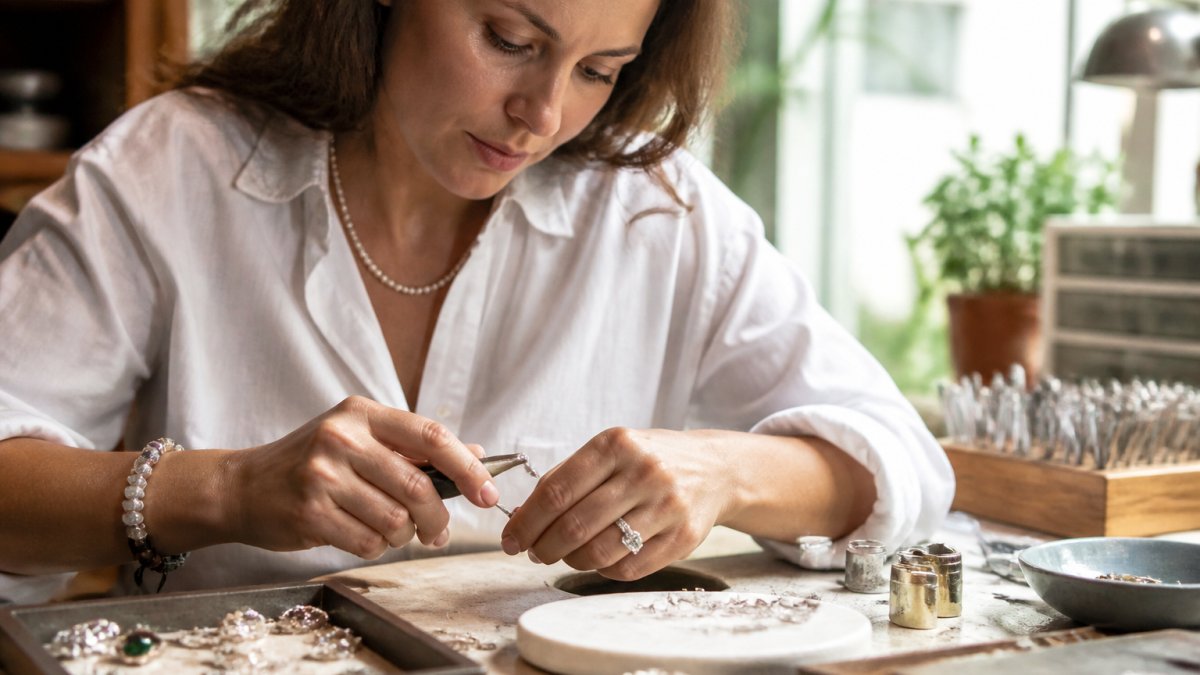
A solitaire holds a single stone on a plain band, the cleanest and most classic choice. A halo surrounds the centre stone with smaller diamonds, making it appear larger. Other options include the bezel, which encircles the stone in metal for protection, and the three-stone, which adds flanking diamonds.
Diamond Shapes for Engagement Rings: Which Suit Which Hand
Diamond shapes for engagement rings range from round brilliant to oval, emerald, pear and cushion, and each shape flatters different hand proportions. Round brilliant remains the most popular because its cut maximises sparkle.
The general rule: elongated shapes such as oval, pear and marquise make shorter fingers look longer, while round and cushion suit most hands. Emerald cuts show clarity rather than fire, so they reward a higher clarity grade. If you are choosing between shapes, try them in person or request images on a hand, because a shape that looks striking in isolation can read very differently when worn.
| Shape | Best For | Sparkle Style |
|---|---|---|
| Round brilliant | Most hands, maximum sparkle | Highest brilliance |
| Oval | Lengthening shorter fingers | Bright, soft glow |
| Emerald | Clean, architectural taste | Step-cut, less fire |
| Cushion | Vintage-leaning buyers | Soft, pillowy sparkle |
Budget Planning and Value Trade-Offs
Budget planning for a natural diamond engagement ring works best as a sequence of deliberate trade-offs rather than a single spending target. Because price is driven by the 4Cs, shape and setting, the same budget can produce very different rings depending on where you choose to concentrate value.
Start by ranking your priorities in order. Most buyers find that one or two factors matter far more to them than the rest, and protecting those while conceding on the others is what produces a ring that still feels right years later.
Where the money actually goes
- Cut: The least negotiable. A well-cut stone in a lower clarity or colour grade will out-perform a poorly cut stone with better grades on paper. Protect this first.
- Carat: Price climbs steeply at popular weight thresholds. A stone just under a round-number weight often costs noticeably less than one just over it, with no visible difference on the hand.
- Colour: Near-colourless grades read white to the eye in most settings. In yellow or rose metal, a slightly warmer grade is often indistinguishable once set.
- Clarity: Inclusions below VS2 are typically invisible without magnification. This is usually the safest place to concede.
- Setting: Metal choice and complexity add cost. A simple solitaire in platinum or 18ct gold keeps more of the budget in the stone; a halo or three-stone design shifts some of it into the setting.
A practical allocation approach
A common pattern is to decide your ceiling first, then work backwards: fix the cut grade, choose the carat weight you want to see on the hand, then let colour and clarity flex to fit what remains. If the numbers do not meet, reduce carat before cut, a slightly smaller, brilliantly cut stone reads better than a larger, dull one.
Value protections to ask about
Before committing, confirm what is included: complimentary resizing, a return and refund window, and whether the ring comes with an independent grading report. These protections matter most when buying online, where you cannot try the ring on first. A seller who offers them is signalling confidence in the product; a seller who does not is asking you to carry the risk.
Sourcing, Traceability and What to Ignore
Sourcing and traceability concern where a diamond came from and how much of that journey can be evidenced. Ethical sourcing means the stone's path from mine to market is documented, not merely asserted in marketing copy.
What traceability actually covers
Traceability exists on a spectrum. At the minimum end, a seller can confirm a stone is conflict-free under the Kimberley Process Certification Scheme, which regulates the rough diamond trade and requires governments to certify shipments. That is a baseline assurance, not a full provenance record.
Beyond that baseline, some sellers can provide:
- Country of origin where known, though many stones are mixed during sorting and this cannot always be established
- Cutting and polishing centre, which is often recorded even when the mine is not
- Chain of custody documentation from specific mines or manufacturers who operate traceability programmes
- Independent grading report confirming the stone is natural and untreated
The limits worth understanding
Full mine-to-finger traceability is not available for every natural diamond. Stones are frequently aggregated during sorting and cutting, which means the original mine cannot always be identified. A seller who claims complete provenance for every stone is either working with a very specific supply chain or overstating what they hold. The honest answer to "where was this mined?" is sometimes "we cannot confirm the exact mine, but here is what we can document."
Questions worth asking
- Can you show me the independent grading report, and is the certificate number inscribed on the stone?
- What country of origin is recorded, if any?
- Which cutting centre handled the stone?
- Do you hold chain-of-custody documentation, or only Kimberley Process assurance?
- How do you verify your suppliers' claims?
What to ignore
Treat vague ethical language without documentation as noise. Phrases like "responsibly sourced" or "ethically mined" mean little without a certificate, a named programme, or a documented chain. Also ignore any pressure to skip the grading report, and any seller who cannot explain their supply chain at all. A reputable seller welcomes these questions and answers them plainly.
Fit, Sizing and Setting Durability
Ring fit, sizing and setting durability decide whether the ring still looks right after years of daily wear, which is where many purchases quietly disappoint. A ring that spins, pinches or snags will spend more time in a drawer than on a hand.
Get sized properly, ideally at the end of the day when fingers are at their largest, and ask about resizing before you buy, since a comfortable fit is not always the size you first assume. On durability, prong settings expose the stone to knocks while bezel settings protect it. Metal choice matters too: platinum wears slowly, while softer metals show scratches sooner. A lifetime guarantee and free resizing give you room to correct the fit later without starting over.
Frequently Asked Questions
What is a natural diamond engagement ring?
A natural diamond engagement ring features a diamond formed underground over billions of years under intense heat and pressure, then cut and set into a band. Unlike lab-grown stones, each natural diamond has its own origin story and internal characteristics. Most reputable sellers pair the ring with independent certification confirming the stone's grade, so you know exactly what you are buying before you commit.
How do I choose a natural diamond engagement ring?
Start with cut, because it decides how much the diamond sparkles, then balance clarity, colour and carat against your budget. Check the grading certificate, and confirm the seller offers free resizing and a clear returns policy. Try rings on if you can, or ask for detailed video and measurements before ordering online.
What is the difference between a natural and a lab-grown diamond?
Both are diamonds with the same hardness and brilliance, but a natural diamond formed in the earth over billions of years, while a lab-grown one is created in weeks. Natural stones carry a rarity and resale narrative that lab-grown stones do not, and typically cost more for the same carat weight. Neither is a lesser choice; the decision usually comes down to budget and what the moment means to you.
How can I check whether a natural diamond is certified?
Ask for the grading report from an independent laboratory and check that the certificate number matches the stone. The report should state the cut, clarity, colour and carat, plus any treatments. If a seller cannot provide a matching certificate, walk away. Certification is your main protection, so treat it as essential rather than optional when buying a natural diamond.
Choosing a natural diamond engagement ring comes down to matching a stone's origin, cut and setting to the life it will actually live in. At thejewellution, we craft each piece with hand-finished settings and a focus on value for money, backed by free resizing and a free return and refund policy, so the ring that arrives is the ring you keep. Book a consultation with thejewellution and let us help you choose a natural diamond engagement ring you will still love decades from now.